Crude oil futures are among the most actively traded financial instruments in the world — on a busy day, WTI futures volume on CME Group’s NYMEX runs well past a million contracts. For traders who want direct exposure to energy prices, nothing else matches futures for liquidity, near-24-hour access, and the ability to get short as easily as long.
Learning how to trade crude oil futures, though, is less about chasing that opportunity and more about surviving the leverage. A single poorly managed position can inflict serious damage on an account. If you are still building your foundation in the market itself — benchmarks, physical flows, what actually moves the price of a barrel — start with our complete guide to crude oil trading, then come back here for the execution mechanics.
What follows is the full process: which contract sizes exist and who they suit, how to choose a broker, how margin really works, when to trade, how to roll positions, and the risk rules that decide who is still trading a year from now. The numbers scale whether you fund the account with $5,000 or $50,000. The discipline required does not change at all.
What Are Crude Oil Futures?
A futures contract is a legally binding agreement to buy or sell a standardized quantity of a commodity at a predetermined price on a specific future date. When you buy a crude oil futures contract, you are agreeing to take delivery of a set number of barrels of oil at a specified price when the contract expires. When you sell a futures contract, you are agreeing to deliver that oil.
In practice, the vast majority of crude oil futures traders — well over 95% — never take or make physical delivery. They close their positions before expiration or roll them into the next contract month. The contracts function primarily as financial instruments for speculation and hedging, not as mechanisms for buying and selling physical barrels.
Crude oil futures trade on regulated exchanges: WTI on the New York Mercantile Exchange (NYMEX, part of CME Group), and Brent on the Intercontinental Exchange (ICE) under the symbol B. The two benchmarks behave differently enough that the choice matters — see our breakdown of the differences between WTI and Brent crude — but the exchange mechanics are similar. In both cases the exchange clearinghouse stands as counterparty to every trade, eliminating the credit risk of a private over-the-counter deal. One structural difference worth knowing early: WTI futures are physically deliverable at Cushing, Oklahoma, while ICE Brent futures are cash-settled against the Brent Index at expiry. No tankers change hands when a Brent future expires.
Understanding the Contract Types
The CME Group offers three sizes of WTI crude oil futures contracts, each designed for different types of traders and account sizes. Choosing the right contract is one of the most important decisions you will make as a new futures trader.
Standard WTI Crude Oil Futures (CL)
The standard contract — ticker symbol CL — represents 1,000 barrels of West Texas Intermediate crude oil. This is the benchmark contract and the most liquid crude oil futures instrument in the world. At a price of $70 per barrel, one CL contract has a notional value of $70,000. The full specifications live on CME Group’s contract page, and they are worth reading in the original at least once.
The minimum price increment (tick size) is $0.01 per barrel, which equals $10.00 per contract. In a typical trading session, WTI crude oil moves between $1.00 and $3.00, meaning a single standard contract can gain or lose $1,000 to $3,000 in a day. On particularly volatile days — a surprise OPEC production cut, a geopolitical shock — moves of $5.00 or more happen, translating to $5,000+ per contract.
As of early 2026, initial margin requirements for the standard CL contract are approximately $4,100 to $6,500 depending on your broker and whether you are holding positions overnight. Day trading margins can be as low as $1,000 to $2,000 at some brokers. This means you are controlling $70,000 worth of oil with a deposit of a few thousand dollars — leverage of roughly 10:1 to 70:1.
E-mini Crude Oil Futures (QM)
The E-mini contract represents 500 barrels of WTI crude oil — exactly half the size of the standard contract. The tick size is $0.025 per barrel, equal to $12.50 per contract. E-minis offer a middle ground between the full-size contract and the micro, though they are less liquid than either. Many traders skip the E-mini entirely in favor of the standard or micro contracts.
Micro WTI Crude Oil Futures (MCL)
The Micro WTI contract — ticker symbol MCL — represents just 100 barrels of crude oil, one-tenth the size of the standard contract. The tick size is $0.01 per barrel, equal to $1.00 per contract. At $70 per barrel, one MCL contract has a notional value of $7,000.
Micro contracts have transformed crude oil trading for retail participants. With initial margin requirements of roughly $550 to $800 and day trading margins as low as $100 to $300 at some brokers, the Micro WTI allows traders with smaller accounts to participate in the oil market with appropriate position sizing. A $1.00 move in oil prices equals $100 per Micro contract, compared to $1,000 on the standard.
For beginners, the Micro WTI is the right starting point. It lets you learn the mechanics of futures trading with real money at stake, but with a fraction of the risk exposure of the full-size contract.
How to Trade Crude Oil Futures: The Seven-Step Process
With the contract menu clear, the rest is process. Each of the following steps closes off one way to blow up by accident.
Step 1: Choose a Futures Broker
Not all brokers offer futures trading, and among those that do, there are significant differences in commissions, margin policies, platform capabilities, and customer support. Here is what to evaluate when selecting a broker for crude oil futures:
Regulatory status. In the United States, futures brokers must be registered with the Commodity Futures Trading Commission (CFTC) and be members of the National Futures Association (NFA). Verify your broker’s registration before depositing funds.
Commission structure. Futures commissions are typically charged on a per-contract, per-side basis (meaning you pay when you enter and again when you exit). For standard CL contracts, competitive rates range from $0.50 to $2.50 per side. For Micro WTI contracts, expect $0.25 to $1.25 per side. Lower commissions matter more for active traders who execute dozens of trades per week.
Margin requirements. Brokers set their own margin requirements, which must meet or exceed the exchange minimum. Some brokers offer aggressive day trading margins (as low as $500 per CL contract during market hours), while others require the full exchange margin at all times. Choose a margin policy that matches your trading style.
Platform and charting. Your trading platform is your primary tool. Look for real-time streaming quotes, advanced charting with technical indicators, one-click order entry, and reliable execution speed. Popular platforms for crude oil futures include NinjaTrader, Sierra Chart, TradingView (with broker integration), and the proprietary platforms offered by Interactive Brokers, Charles Schwab (thinkorswim), and TradeStation.
Data feeds. Real-time CME market data typically costs $10 to $15 per month for non-professional traders. Some brokers include this in their commission structure, while others charge separately. Make sure you have Level 1 data (best bid/ask) at minimum; Level 2 data (full order book depth) is valuable for more advanced traders.
Step 2: Fund Your Account and Understand Margin
Futures trading uses a margin system that is fundamentally different from stock margin. When you buy stocks on margin, you are borrowing money from your broker. When you trade futures on margin, you are posting a good-faith deposit — called “performance bond” — to guarantee your ability to cover potential losses.
There are several margin concepts you need to understand:
Initial margin is the amount required to open a new position. For a standard CL contract, this is approximately $4,100 to $6,500 as of 2026. For Micro WTI (MCL), it is roughly $550 to $800.
Maintenance margin is the minimum balance you must maintain while holding a position. If your account equity falls below the maintenance margin level due to adverse price movement, you will receive a margin call requiring you to deposit additional funds or reduce your position. The maintenance margin for CL is approximately $3,800; for MCL, roughly $500.
Day trading margin is a reduced margin rate offered by many brokers for positions that are opened and closed within the same trading session. Day trading margins for CL can be as low as $1,000 to $2,000; for MCL, as low as $100 to $300. Be aware that if you hold a day trade past the session close, your broker may automatically liquidate your position or require you to meet the full overnight margin.
A sensible minimum account size for trading one standard CL contract is $15,000 to $25,000 — enough to absorb normal drawdowns without getting margin called. For Micro WTI, you can start with as little as $2,500 to $5,000, though $5,000 or more provides a more comfortable cushion.
Step 3: Learn the Trading Hours and Key Sessions
Crude oil futures trade on the CME Globex electronic platform nearly 24 hours a day, Sunday through Friday. The trading week opens at 5:00 PM Central Time on Sunday and runs continuously until 4:00 PM CT on Friday, with a daily maintenance break from 4:00 PM to 5:00 PM CT each weekday.
Not all hours are created equal. The most active and liquid periods for crude oil futures are:
The US session (8:00 AM to 2:30 PM CT) accounts for the bulk of daily volume. This is when the EIA petroleum inventory report is released (9:30 AM CT on Wednesdays), OPEC announcements are made, and US economic data hits the wires. Spreads are tightest and liquidity is deepest during this window.
The European session overlap (2:00 AM to 8:00 AM CT) sees moderate activity driven by Brent crude trading on ICE and European economic data releases.
The Asian session (5:00 PM to 2:00 AM CT) is typically the quietest period, with thinner liquidity and wider bid-ask spreads. However, significant moves can occur during this session if major news breaks from the Middle East or Asia.
New traders should focus on the US session, when liquidity is strongest and execution quality is best.
Step 4: Understand Contract Expiration and Rolling
Every futures contract has an expiration date — the date on which the contract ceases trading and settlement occurs. For WTI crude oil, this is three business days before the 25th calendar day of the month preceding the delivery month. For example, the June 2026 contract expires in the third week of May 2026.
Because WTI crude oil futures are physically settled (the contract calls for actual delivery of 1,000 barrels at Cushing, Oklahoma), you must be aware of two critical dates:
First Notice Day (FND) is the first day on which the exchange can assign delivery notices to holders of long positions. For WTI crude, this occurs on the last business day of the month prior to the contract month. If you are long a futures contract on First Notice Day, your broker may forcibly close your position to avoid delivery — and they may charge you a fee for doing so.
Last Trading Day (LTD) is the final day you can trade the expiring contract. After this date, any remaining open positions go to settlement.
The practical implication is straightforward: close or roll your position well before First Notice Day. Most active traders roll their positions 5 to 10 trading days before expiration, when the next contract month has already become the most actively traded (“front month”) contract. Rolling means simultaneously closing your position in the expiring contract and opening the same position in the next month’s contract.
The price difference between the expiring contract and the next month is known as the calendar spread. When the market is in contango (the next month trades at a premium to the current month), rolling a long position costs money — you are selling at a lower price and buying at a higher one. When the market is in backwardation (the next month trades at a discount), rolling a long position generates a small gain.
Note that ICE Brent handles expiration differently: the contract cash-settles against the Brent Index, so there is no delivery risk and no First Notice Day to manage. That simplicity is one reason some traders prefer Brent for positions they intend to hold near expiry.
What Happens When Traders Ignore Expiration: April 20, 2020
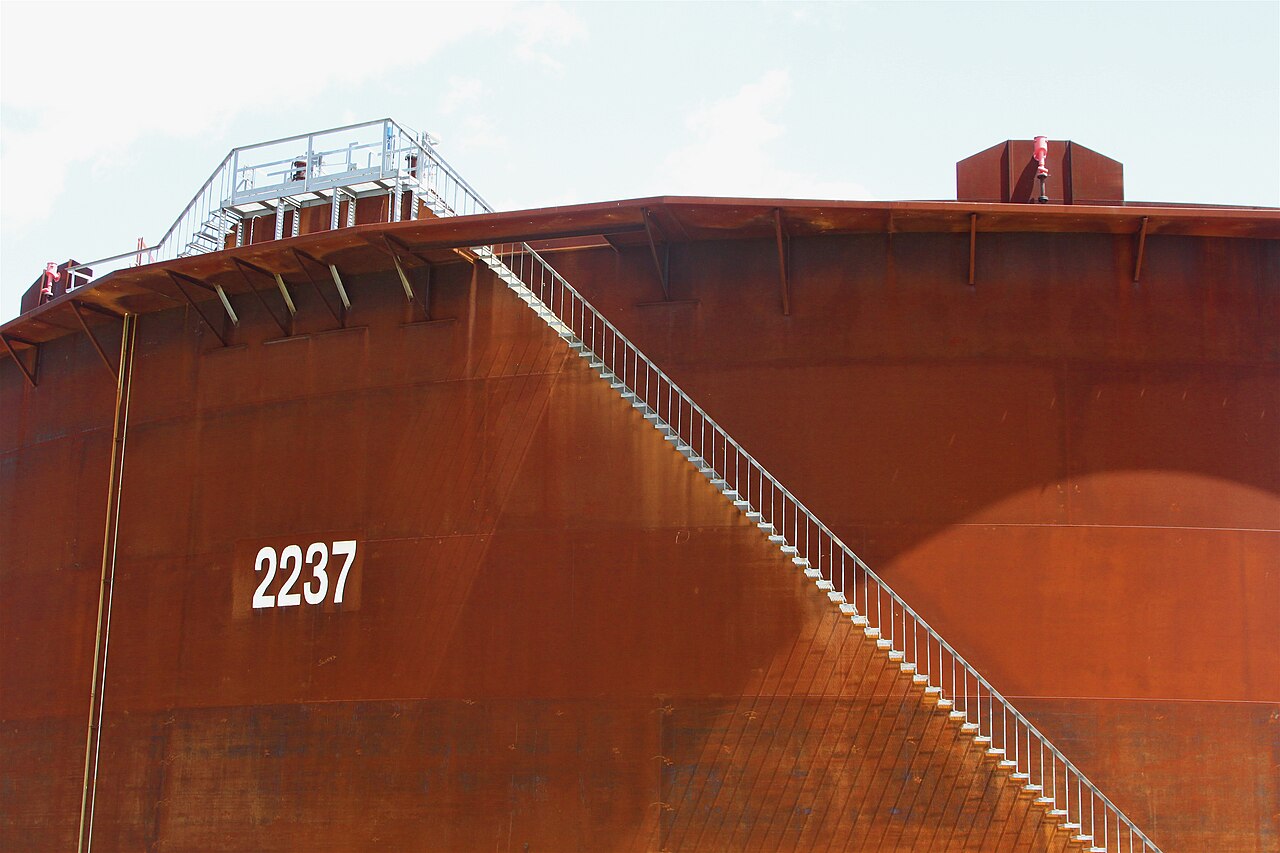
If you want a permanent reminder of why these mechanics matter, look at April 20, 2020. The May 2020 WTI contract was one day from its last trade, the pandemic had crushed demand, and storage capacity at Cushing was effectively spoken for. Longs who could not take delivery had almost nobody left to sell to. The contract settled at negative $37.63 per barrel — sellers were paying buyers to take oil off their hands. Retail traders holding the expiring month, some through brokers whose systems had never contemplated a negative price, absorbed catastrophic losses in a single session.
The lesson is not merely that oil can print negative (CME has since confirmed its systems allow it). The lesson is that an expiring physically-settled contract stops behaving like a financial instrument and starts behaving like 1,000 real barrels that need a real tank. Trade the front month, roll early, and leave expiration week to the physical players.
Step 5: Place Your First Trade
With your account funded and your platform set up, you are ready to place a trade. Here is the mechanical process:
Select the contract. In your trading platform, find the crude oil futures symbol. For standard WTI, this is typically CL followed by the month and year code (e.g., CLM26 for June 2026). For Micro WTI, it is MCL followed by the same date code. Make sure you are trading the front-month contract, which has the most liquidity.
Analyze the market. Before entering a trade, you should have a thesis based on fundamental factors (such as an upcoming EIA inventory report or an OPEC meeting), technical factors (such as a breakout above resistance), or both. Never enter a trade without a clear reason and a defined exit plan.
Choose your order type. The three most common order types are:
Market orders execute immediately at the best available price. They guarantee a fill but not a specific price. Use market orders when you need to get in or out quickly and the bid-ask spread is tight (typically 1 tick during peak hours for CL).
Limit orders specify the maximum price you will pay (for a buy) or the minimum price you will accept (for a sell). They guarantee your price but not execution — the market may never reach your limit. Use limit orders when you want to enter at a specific price level.
Stop orders become market orders when a specified price is reached. They are primarily used as stop-loss orders to limit losses on an existing position. A sell stop placed below your entry will automatically exit your long position if the market drops to that level.
Set your stop-loss and profit target before entering. Decide exactly where you will exit if the trade goes against you (your stop-loss) and where you will take profits (your target) before you click the buy or sell button. Many platforms allow you to attach bracket orders — a stop-loss and a profit target — simultaneously when entering a position.
Monitor your position. Once your trade is active, monitor it but resist the urge to micromanage. If your original analysis was sound and your stop and target are set, let the trade work. Constantly adjusting your stop or target based on short-term noise is a common beginner mistake that erodes your edge.
Step 6: Master the Key Data Releases
Crude oil prices react sharply to scheduled data releases, and understanding the economic calendar is essential for any oil futures trader. Missing a major data release while holding an open position can result in unexpected and rapid losses.
EIA Weekly Petroleum Status Report (Wednesday, 10:30 AM ET). This is the single most important weekly data point for crude oil traders. The report covers US crude oil inventories, gasoline and distillate stocks, refinery utilization, domestic production, and import/export data. The headline number — the weekly change in crude oil inventories — is what moves prices most sharply. A larger-than-expected inventory build is bearish (it signals oversupply), while a larger-than-expected draw is bullish (it signals strong demand or constrained supply). Deviations of 2 million barrels or more from the consensus forecast typically produce an immediate price reaction of $0.30 to $1.00 or more.
API Weekly Statistical Bulletin (Tuesday, 4:30 PM ET). The American Petroleum Institute releases its own inventory estimates the evening before the EIA report. Because the API data previews the official government figures, it often moves prices in after-hours trading. The API report is considered less reliable than the EIA data, so the market may partially reverse the API-driven move after the official EIA numbers are released.
Baker Hughes Rig Count (Friday, 1:00 PM ET). The rig count reports the number of active drilling rigs in the US and Canada. A rising rig count signals future production increases (bearish for prices), while a declining count suggests potential supply reductions (bullish). The rig count is a lagging indicator — it reflects drilling decisions made weeks or months ago — but the market still reacts to surprises.
OPEC meetings and announcements. OPEC+ production decisions are among the most powerful catalysts in the oil market. Full OPEC meetings occur several times per year, but ministerial statements, quota adjustments, and informal agreements can surface at any time. Always be aware of the OPEC calendar when holding overnight positions.

Step 7: Apply Sound Risk Management
Risk management is not a suggestion in crude oil futures trading — it is a survival requirement. The leverage available in futures means that a sequence of poorly managed trades can devastate an account in days. Every professional oil trader treats risk management as the foundation of their approach, not an afterthought.
The 1-2% Rule
Never risk more than 1-2% of your total account equity on a single trade. If your account is $10,000, your maximum risk per trade should be $100 to $200. This means that if you are trading Micro WTI (where a $1.00 move equals $100) and your stop-loss is $1.50 away from your entry, your maximum risk is $150 per contract — within the 1.5% threshold for a $10,000 account. On a standard CL contract, the same $1.50 stop would represent $1,500 in risk, requiring a $75,000 to $150,000 account to stay within the 1-2% rule.
Position Sizing Formula
Calculate your position size using this formula: Number of contracts = (Account equity × Risk percentage) ÷ (Stop distance in dollars × Dollar value per point). For example, with a $20,000 account, 2% risk ($400), a $2.00 stop on MCL ($1.00 per tick × 200 ticks = $200 per contract), you can trade 2 Micro contracts. This systematic approach removes emotion from the sizing decision.
Always Use Stop-Loss Orders
Every position you enter should have a stop-loss order in the market immediately. Do not rely on “mental stops” — the promise to yourself that you will exit if the price reaches a certain level. In fast-moving oil markets, hesitation of even a few seconds can turn a manageable loss into a catastrophic one. Many traders have been wiped out because they told themselves they would “exit at the next bounce” while the market kept falling.
Avoid Revenge Trading
After taking a loss, the temptation to immediately re-enter the market to “make it back” is powerful — and dangerous. This behavior, known as revenge trading, typically leads to larger, more reckless positions and even bigger losses. If you take a loss, step away from the screen for at least 15 to 30 minutes. Review what went wrong objectively. Only re-enter when you have a fresh setup that meets all your criteria, not because you feel emotionally compelled to recover your money.
Set a Daily Loss Limit
Define a maximum amount you are willing to lose in a single trading day — typically 3-5% of your account. If you hit that limit, stop trading for the rest of the day. This single rule has saved countless traders from the spiral of increasing losses that comes from trading while frustrated, tired, or emotionally compromised.
Understanding Contango, Backwardation, and the Futures Curve
As you develop your crude oil trading skills, understanding the shape of the futures curve becomes increasingly important. The futures curve plots the prices of successive contract months, and its shape reveals critical information about market expectations.
Contango occurs when future-month contracts trade at progressively higher prices than the front month. This is considered the “normal” state for oil futures because it reflects the cost of storing physical oil (storage fees, insurance, financing). In a contango market, the front month might trade at $70 while the contract six months out trades at $73. Contango is generally associated with a well-supplied or oversupplied market — when inventories at Cushing swell, the front month gets pushed to a discount and the curve steepens.
Backwardation occurs when front-month contracts trade at a premium to later months. This condition signals that the market perceives a near-term supply shortage — buyers are willing to pay more for immediate delivery than for delivery in the future. Backwardation is inherently bullish and is often associated with strong demand, OPEC production cuts, or supply disruptions. During the oil price spikes of 2022, the WTI curve was in steep backwardation, with front-month prices trading $10 or more above deferred months.
The shape of the curve matters for traders in several ways. If you hold a long position and the market is in contango, rolling your position forward costs money (negative roll yield). If the market is in backwardation, rolling generates a small positive return. Some advanced traders focus exclusively on trading the spread between different contract months rather than the outright price, a strategy known as calendar spread trading.
Building a Trading Routine for Crude Oil Futures
Consistency is the hallmark of successful futures traders. Developing a daily routine helps you stay disciplined, prepared, and focused. Here is a framework that many professional oil traders follow:
Pre-market preparation (30-60 minutes before trading). Review overnight price action in crude oil and related markets — Brent, natural gas futures, the US dollar. Check the economic calendar for scheduled data releases. Read the morning commentary from your broker or trusted news sources. Identify key support and resistance levels on your charts. Note any open positions and review your stops and targets.
Active trading session. Execute your trading plan. Take only setups that meet your predefined criteria. Log every trade in your journal — entry price, exit price, reason for the trade, and your emotional state. Do not deviate from your plan because of a “feeling” about the market.
Post-market review (15-30 minutes after trading). Review every trade you took during the session. Did you follow your plan? Was your position sizing correct? Were your stops and targets appropriate? Identify one thing you did well and one thing you can improve. Update your trading journal.
Weekly review. At the end of each trading week, review your aggregate performance. Calculate your win rate, average win, average loss, and expectancy (the average dollar amount you gain or lose per trade). Look for patterns — are certain setups more profitable than others? Are you making the same mistakes repeatedly?
Common Mistakes to Avoid
Learning from the mistakes of others is far less expensive than making them yourself. Here are the errors that claim the most beginner futures trading accounts:
Trading without a plan. Entering the market because “oil looks like it’s going up” is not a strategy. Without specific entry criteria, exit rules, and position sizing guidelines, you are gambling, not trading.
Overleveraging. Just because your broker allows you to hold 10 contracts of CL with your account balance does not mean you should. New traders should start with one Micro WTI contract and increase size only after demonstrating consistent profitability.
Ignoring the economic calendar. Holding a large position through the EIA weekly report without understanding the risks is a recipe for disaster. These reports can move oil prices by $1.00 or more in seconds. Either reduce your position before major data releases or ensure your stops can withstand the volatility.
Not respecting stops. Moving your stop-loss further away as the market moves against you — telling yourself “it will come back” — is the single most destructive habit in futures trading. Your original stop was set for a reason. Honor it.
Overtrading. Taking 15 or 20 trades per day because you feel the need to “be in the market” increases your commission costs, your stress, and your exposure to random noise. Quality setups are worth waiting for.
Forgetting about fees and slippage. Commissions, exchange fees, and slippage (the difference between your expected price and your actual fill) are real costs that reduce your profitability. A trader who makes 10 round-trip trades per day on CL at $5.00 per round trip is paying $50 per day, or roughly $1,000 per month, in commissions alone.
Your Roadmap: From Paper Trading to Live Markets
The transition from learning about crude oil futures to actually trading them should be gradual and deliberate. If you have not yet opened an account at all, our walkthrough of how to start trading oil covers instrument selection and account setup from scratch; the roadmap below assumes you are heading specifically for futures.
Month 1-2: Education and observation. Study contract specifications, order types, and the fundamental drivers of oil prices. Watch the market during US trading hours without trading. Learn to read a futures chart, identify support and resistance, and observe how the market reacts to data releases.
Month 2-4: Paper trading. Open a simulated account and trade Micro WTI futures with virtual money. Treat it as seriously as you would real money — follow your trading plan, use stop-losses, and keep a journal. Your goal is to develop mechanical proficiency with the platform and test your strategy over a meaningful sample of trades (at least 50 to 100).
Month 4-6: Small live trading. Transition to a real account and trade one Micro WTI contract. The psychological shift from paper to live trading is significant — losses feel very different when real money is at stake. Start small, focus on execution quality, and resist the urge to increase position size until you have demonstrated at least two consecutive profitable months.
Month 6+: Gradual scaling. As your account grows and your confidence builds, gradually increase your position size in line with your risk management rules. Consider whether the E-mini or standard CL contract is appropriate for your account size and skill level. Continue journaling, reviewing, and refining your approach.
Discipline Over Prediction
Trading crude oil futures successfully is not about predicting where oil prices will go. It is about developing a systematic approach that gives you a statistical edge, managing your risk so that no single trade can knock you out, and maintaining the discipline to execute your plan consistently over hundreds and thousands of trades.
The tools, data, and platforms available to retail traders today are better than at any point in history. Micro WTI contracts have democratized access to one of the world’s deepest commodity markets. The question is not whether you can trade crude oil futures — it is whether you are willing to invest the time, practice, and discipline required to do it well.
Start with paper trading, build your skills gradually, and never risk more than you can afford to lose. And when you want to zoom back out from execution mechanics to the market itself — supply and demand, benchmarks, and the players who move them — our crude oil trading guide ties the whole picture together. The oil market will be here tomorrow, next week, and next year. There is no rush.