Oil trading attracts thousands of new participants every year, and most of them are gone within twelve months. Not because the market is rigged — because they skipped the preparation and went straight to position-taking. The difference between the survivors and the casualties is rarely talent. It is sequence: education, then simulation, then small size, then scale.
This is a working roadmap for how to start trading oil: which instruments actually make sense for a first account, how to pick a broker, how much capital you realistically need, and the mistakes that end most beginners early. It pairs with our complete guide to crude oil trading, which covers the market fundamentals behind everything here.
What Oil Trading Actually Involves
Oil trading means buying and selling exposure to crude oil and refined product prices through financial instruments — futures, options, ETFs, equities — rather than handling physical barrels. The paper market dwarfs the physical one: daily futures volume in WTI and Brent alone represents notional value in the hundreds of billions of dollars, making oil one of the deepest and most liquid commodity markets in the world.
Three things pull retail traders in:
Liquidity. The oil market trades nearly 24 hours a day across global exchanges. You can enter and exit positions almost whenever you want, and prices respond instantly to news and events.
Volatility. Oil prices swing hard on geopolitical events, supply disruptions, economic data, and seasonal demand shifts. A single Gulf hurricane or OPEC surprise can move prices by double digits in days. That volatility is danger and opportunity in the same package.
Leverage. Most oil trading instruments let you control large positions with relatively small capital. You might control $70,000 worth of oil with a few thousand dollars of margin. Leverage amplifies both gains and losses, which is why it demands respect.
Traders come to oil for different reasons. Some love the technical side — reading charts and identifying patterns. Others focus on fundamentals: supply data, geopolitical risk, inventory reports. Many are drawn by the prospect of eventually trading for a living. Whatever your motivation, treat oil trading as a skill with a long apprenticeship, not an income stream you can switch on.
The Different Ways to Trade Oil
Beginners often don’t realize they have multiple pathways into oil. Each offers different advantages, risk profiles, and capital requirements. Understanding the menu helps you choose the right starting point for your situation.
Oil Futures Contracts
Futures are standardized agreements to buy or sell a fixed quantity of oil at a set price on a future date. The benchmark US contract is NYMEX West Texas Intermediate (ticker CL, part of CME Group): 1,000 barrels per contract, with each one-cent price move worth $10. It trades nearly around the clock, Sunday 6:00 PM through Friday 5:00 PM ET, and initial margin typically runs roughly $4,000 to $6,500 per contract depending on volatility and your broker.
Futures offer the tightest spreads and deepest liquidity of any oil instrument. The trade-offs: they are marked to market daily — losses come out of your account every evening — and full-size contracts demand real capital. We cover the mechanics end to end, from contract selection to expiration handling, in our walkthrough of how to trade crude oil futures.
Oil Options
Options give you the right, but not the obligation, to buy or sell oil futures at a specific price by a specific date. Call options bet on prices rising, while put options bet on prices falling. Options limit your maximum loss to the premium you paid, but they lose value as expiration approaches if the price doesn’t move in your favor.
Oil options appeal to traders who want defined risk, but the learning curve is steeper than futures. Before touching them you need a working grasp of implied volatility and theta decay — and most beginners don’t have it yet.
Exchange-Traded Funds (ETFs) and Exchange-Traded Notes (ETNs)
ETFs and ETNs track oil prices and can be bought and sold like stocks through any brokerage account. The best-known example is USO, the United States Oil Fund. These instruments require minimal capital, work with standard stock accounts, and carry no futures margin requirements.
The downside? Oil ETFs hold futures, and they routinely underperform the spot price because of contango — the cost of rolling contracts forward month after month. If oil rises 10%, a futures-based ETF might capture only 8-9%, and over long holding periods the drag compounds badly. For absolute beginners with limited capital they are a reasonable way to get price exposure, but understand what you own: a strip of futures with a roll cost, not barrels in a tank. More on how that distinction burned people in 2020 below.
Contracts for Difference (CFDs)
CFDs are derivative contracts offered by certain brokers that let you speculate on oil price movements without owning the underlying futures. They offer high leverage (sometimes 50:1 or more) and easy short selling.
The critical caveat: CFDs are not legally available to US retail traders, and offshore providers marketing them to Americans is a red flag in itself. CFD brokers are not regulated by the CFTC, spreads and financing fees quietly eat returns, and the counterparty is the broker — not a clearinghouse. If you are outside the US and considering CFDs, stick to providers regulated by a serious authority (the FCA in the UK, ASIC in Australia) and treat the leverage on offer as a hazard, not a feature.
Oil Company Stocks
Trading the stocks of major oil companies (ExxonMobil, Chevron, Shell) or oilfield service firms offers exposure to the oil industry without trading oil directly. Stock options on these names add flexibility. But equity prices don’t track crude perfectly — company earnings, dividends, hedging programs, and management decisions create divergence. You are trading a business, not a barrel.
The Instruments at a Glance
| Instrument | Typical capital to start | Leverage | Best for | Main drawback |
|---|---|---|---|---|
| Micro WTI futures (MCL) | $2,500–$5,000 | High, but sized for small accounts | Serious beginners | Requires futures account and education |
| Full WTI futures (CL) | $15,000–$25,000 | ~10:1 or more | Experienced, well-capitalized traders | One bad trade can do real damage |
| Oil ETFs (e.g., USO) | Under $500 | None (unleveraged) | Passive price exposure | Contango roll costs erode returns |
| Oil options | $2,000+ | Defined-risk leverage | Traders who know volatility concepts | Steep learning curve, time decay |
| Oil company stocks | Any | None (2:1 with stock margin) | Investors wanting indirect exposure | Tracks the company, not the barrel |
WTI or Brent: Which Market Should You Trade?
New traders often default to WTI without realizing there is a choice. WTI (NYMEX) is the US benchmark, physically delivered at Cushing, Oklahoma. Brent (ICE, symbol B) is the waterborne international benchmark and cash-settles against the Brent Index, so there is no delivery risk at expiry.
For a US-based beginner, WTI is usually the right call: micro-sized contracts exist, US-session liquidity is deepest, and most education and commentary is WTI-centric. But the two grades routinely diverge — the Brent–WTI spread (some platforms quote it as the “Arb”) widens and narrows with US production, pipeline flows, and export economics — and understanding why will make you a better trader in either market. Our comparison of WTI versus Brent crude covers the quality specs, delivery mechanics, and spread behavior in detail.
Choosing Your First Trading Instrument
For beginners heading into futures, start with Micro WTI (ticker MCL). Here is the ladder, smallest to largest:
Micro WTI (MCL): 100 barrels — one-tenth of the full contract. Each one-cent move is worth $1, so a full $1.00 swing in oil is $100 per contract. Initial margin typically runs roughly $550 to $800. Small enough that a string of losing trades is tuition, not catastrophe.
E-mini crude (QM): 500 barrels, half the full size, with each tick ($0.025) worth $12.50. A middle step in theory, but its liquidity is thinner than either MCL or CL, and many traders skip it entirely.
Full-size WTI (CL): 1,000 barrels, roughly $4,000 to $6,500 initial margin. Appropriate once your account clears $15,000 to $25,000 and you have demonstrated consistent profitability at smaller size.
Starting with Micro contracts lets you learn price action, test your trading plan, and experience real losses (and gains) with capital you can afford to lose. This is invaluable. Many traders jump straight to larger contracts, lose half their account in weeks, and quit forever. Don’t be that trader.
How Much Money Do You Actually Need?
The honest answer: more than the minimum, less than you fear. A futures broker may let you open an account with $2,000, and day-trading margins on a micro contract can be a few hundred dollars. Neither number tells you what you need — they tell you what you can get away with until the first losing streak.
Work backwards from risk instead. If you follow the 1-2% rule (covered below) and your typical Micro WTI trade risks $50 to $100, you need roughly $5,000 so that a normal trade risks 1-2% of the account. With $2,500 you can still trade responsibly, but every position must be a single micro with a tight stop, and a five-trade losing streak — which happens to everyone — will test your nerve. Under $2,000, futures are the wrong tool; build capital first or use a small ETF position to learn how oil moves.
Two more rules about the money itself. It must be capital you can lose entirely without changing your life — not rent, not the emergency fund, not borrowed. And keep it separate from long-term investments. A trading account is a business inventory, not a nest egg, and mixing the two corrupts decisions on both sides.
Setting Up Your Trading Account
Getting started requires three decisions: choosing a broker, opening a futures margin account, and funding it appropriately.
Selecting a Broker
Your broker is your gateway to the markets. Look for:
Regulation. In the United States, futures brokers must be registered with the CFTC and be members of the National Futures Association (NFA). Verify registration on the NFA’s BASIC database before depositing a dollar. This is non-negotiable — it is what stands between you and the sort of “broker” that disappears with client funds.
Low commissions. Futures commissions run from about $0.25 to $1.25 per side on micro contracts and $0.50 to $2.50 per side on full-size contracts. At high trade frequency this compounds quickly. Confirm the broker supports micro contracts at sensible rates — some price them almost as high as full-size.
Quality technology. You need a platform that is stable, fast, and provides real-time quotes. Popular options include NinjaTrader, TradeStation, thinkorswim (now under Charles Schwab), and Interactive Brokers’ Trader Workstation. Test the demo version before funding anything.
Customer support. Real humans should be reachable by phone during market hours. When your platform freezes with an open position, an email ticket queue is not support.
Educational resources. Some brokers offer free courses, webinars, and tutorials. Useful, though never sufficient on their own.
Opening a Margin Account
You’ll need a futures margin account, not a standard stock margin account. Futures accounts operate differently — they are marked to market daily, meaning gains and losses settle in cash every evening rather than accruing as paper P&L.
When opening an account, you’ll provide:
- Personal and financial information
- Proof of identity and address
- A trading experience questionnaire
- Investment objectives and risk tolerance
Answer these questions honestly. Brokers use them to assess suitability, and false answers can void your account protections later.
Initial deposit requirements range from $2,000 to $10,000 depending on the broker and the products you trade. For beginners starting with micro contracts, $5,000 is a reasonable opening balance — enough to trade one or two MCL contracts within sane risk limits.
Budgeting for the Costs Nobody Advertises
Real-time CME market data runs $10 to $15 per month for non-professionals. Commissions on micros look tiny, but an overactive beginner making ten round trips a day can burn hundreds of dollars a month before slippage even enters the picture. And it will: budget a tick or two of slippage per trade in your planning. If your strategy’s edge disappears after subtracting commissions and slippage, you don’t have a strategy — you have a donation schedule.
Essential Education Before Your First Trade
Jumping into live trading without education is like performing surgery without medical school — the outcomes are predictable and tragic. Put in the study time first.
Reading: Foundation Knowledge
“Oil 101” by Morgan Downey. The best plain-English tour of the physical oil industry — what refineries actually do, how crude is priced and moved, why quality differences matter. Read this before any trading book; it will make every inventory report and OPEC headline legible.
“Market Wizards” by Jack Schwager. Interviews with successful traders reveal patterns in how winners think and operate differently from losers.
“One Good Trade” by Mike Bellafiore. How professional intraday traders think and operate — mental game, position sizing, and developing an edge.
“Technical Analysis of the Financial Markets” by John Murphy. Charts and technical analysis are tools nearly every oil trader uses. This is the standard reference.
“Trading Commodities and Financial Futures” by George Kleinman. A practical, futures-specific text covering order mechanics, spreads, and money management from a veteran commodity broker.
Online Learning: Practical Skills
CME Group’s free education portal covers energy contract mechanics straight from the exchange. The US Energy Information Administration is the primary source for supply, demand, and inventory data — bookmark it now. Beyond that, broker webinars and the futures-focused corners of Reddit and Discord are useful for market color and largely worthless as strategy sources. Treat anyone selling a “proven oil trading system” as entertainment at best.
Plan on 100 to 200 hours of reading, watching, and chart time before your first live trade. That sounds excessive right up until you price the alternative.
Understanding the Fundamentals
Successful oil traders understand what moves crude prices:
Supply disruptions. Hurricanes in the Gulf of Mexico, sanctions on major producers, or refinery outages spike prices fast. Follow geopolitical news and weather forecasts.
Inventory reports. The EIA releases its Weekly Petroleum Status Report every Wednesday at 10:30 AM ET. Draws (decreases) in crude inventory suggest stronger demand and tend to support prices. Builds suggest oversupply and pressure prices lower. The market reaction keys off the surprise versus consensus, not the raw number.
Economic growth. Strong economic data increases fuel demand; recessions destroy it. Watch GDP forecasts, employment reports, and manufacturing data.
Dollar strength. Oil is priced in US dollars. A stronger dollar makes oil more expensive for foreign buyers, dampening demand. Monitor the US Dollar Index (DXY).
Interest rates and monetary policy. Federal Reserve decisions influence both growth expectations and the dollar, and oil feels both.
Seasonal patterns. Summer driving season (roughly April through September) lifts gasoline demand; winter lifts heating fuel demand. These create recurring, if not guaranteed, seasonal tendencies.
The Cautionary Tale Every New Oil Trader Should Know: April 2020
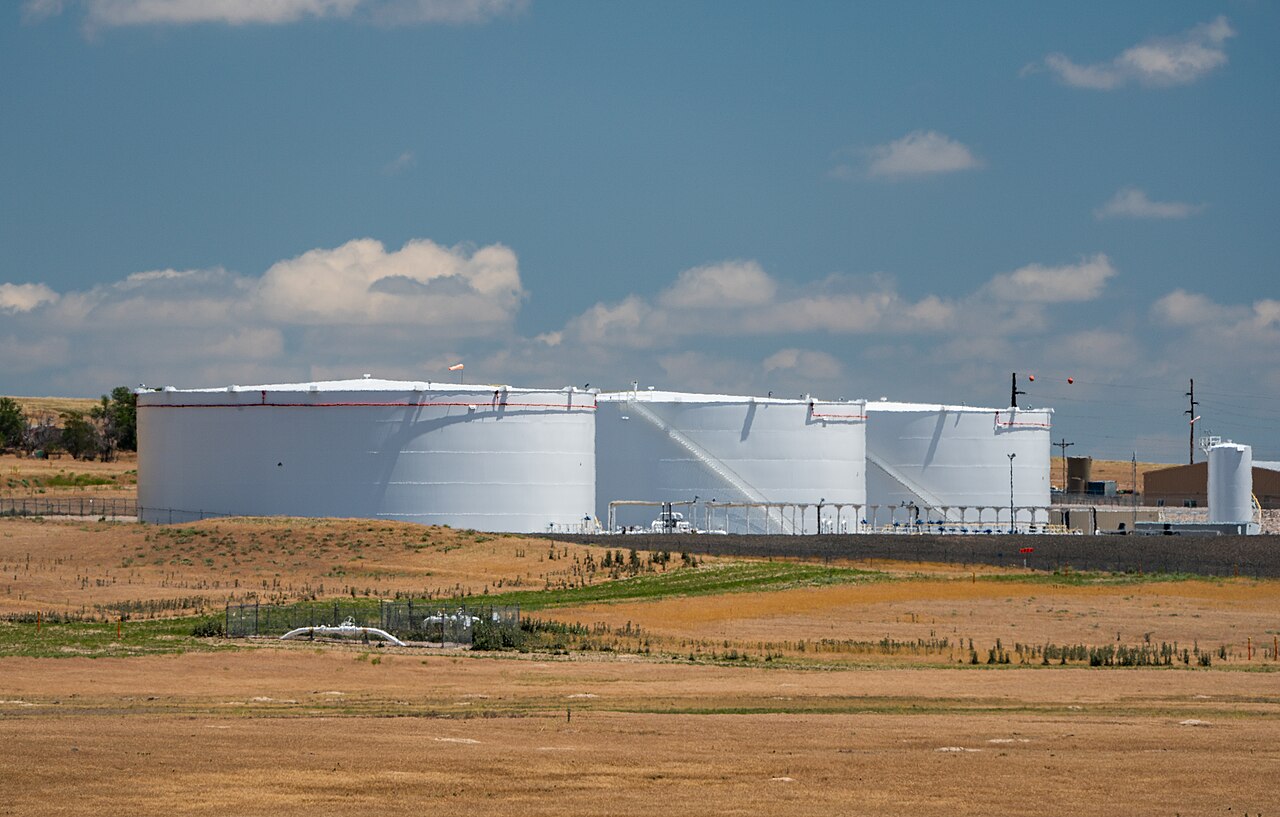
On April 20, 2020, the expiring May WTI futures contract settled at negative $37.63 per barrel. Pandemic lockdowns had crushed demand, storage at the Cushing, Oklahoma delivery hub was effectively spoken for, and longs in a physically-delivered contract had to get out with almost nobody willing to take the other side. Sellers ended the day paying buyers to take oil off their hands.
Retail traders were hit from two directions. Some held the expiring contract directly, often through brokers whose systems had never contemplated a negative price, and absorbed losses far beyond their account balances. Others held USO, the largest oil ETF, believing they had bought “cheap oil” — only to discover the fund held a massive share of front-month futures open interest and was forced to restructure its holdings across multiple months and execute a reverse share split. Investors who thought they were buying oil at $20 and waiting for a rebound instead watched roll costs in a brutally steep contango grind their position down even as spot prices recovered.
Three lessons, and none of them require living through it yourself. First: know your instrument’s settlement mechanics — physical delivery is not a footnote. Second: never hold an expiring contract; roll or close early, always. Third: a futures-based ETF is not a barrel in a tank, and in steep contango it quietly bleeds. Nothing about your first year of trading requires learning any of this the expensive way.
Paper Trading: Practice Without Risk
Once you’ve done the reading, paper trading — a simulator with virtual money — is the bridge between learning and live risk. Skip it and you will pay for the same lessons in cash.
Paper trade for a minimum of 2-3 months. That window lets you see your trading plan perform across different market conditions — trending weeks, dead ranges, and at least a few data-release shocks.
During paper trading, track your results religiously:
- Record every entry, exit, and the reason for the trade
- Note market conditions (trending, range-bound, volatile, calm)
- Track your win rate
- Calculate your profit factor (gross profit divided by gross loss)
- Identify patterns in your best and worst trades
Only move to real money when your simulated account shows consistent profitability over at least 50 trades and 2-3 months. And calibrate expectations: a 55% win rate with wins larger than losses is genuinely good. If your simulator shows an 80% win rate, you are probably doing something that will not survive contact with live markets — like averaging down.
Risk Management Basics: The Foundation of Survival
Risk management separates professional traders from gamblers. Professionals who lose ten consecutive trades remain in business. Gamblers who lose ten consecutive trades are broke.
The 1-2% Rule
The most important concept in trading: never risk more than 1-2% of your account on a single trade.
Example: you have a $10,000 account and risk 1.5% per trade — $150 maximum loss. You’re looking at a Micro WTI trade with a stop-loss 50 cents below entry. Each MCL contract gains or loses $1 per one-cent move, so a 50-cent stop risks $50 per contract. With $150 of allowed risk, you can trade three micros.
This position sizing rule has three critical benefits:
- Survival: You can lose 20-30 trades in a row and still have capital left
- Compounding: Small consistent wins build into significant gains over time
- Psychology: At 1-2% risk, losing trades are tolerable — you sleep fine at night
Risk 5% per trade and a modest losing streak cripples your account. Risk 10% and ordinary bad luck wipes you out entirely. This, more than any failure of chart-reading, is why most beginners fail.
Stop Loss Orders
A stop loss order automatically exits your trade at a predetermined price if the market moves against you. Every trade gets a stop placed at entry. No exceptions, no “mental stops.” Without a working stop, a small loss can become account destruction the first time you freeze up or your internet drops.
Take Profit Targets
Define where you’ll take profits before entering a trade. Common approaches include:
- Risk-reward ratios: Risk $100 to make $200 (2:1 reward-to-risk)
- Technical targets: Exit at defined resistance or support levels
- Time-based exits: Exit after a set period regardless of price
- Trailing stops: Let winners run while a moving stop protects gains
Each approach has merit. Pick one, write it into your plan, and stop improvising.
Building Your Trading Plan
Professional traders don’t trade on vibes. They follow a written plan that defines:
Your market. “I trade Micro WTI crude oil futures on the 4-hour timeframe.”
Your setup. “I enter when price breaks above the 20-period moving average on increased volume.”
Your risk. “I risk $150 per trade, which is 1.5% of my $10,000 account.”
Your stops. “I place my stop loss 30 cents below my entry.”
Your targets. “I target a 2:1 reward-to-risk ratio or exit at the prior swing high.”
Your limits. “My maximum account risk per day is 5% and per week is 10%.”
Your hours. “I only trade the US morning session, when liquidity is deepest.”
Writing this down forces clarity. When you’re live and emotional, you’ll refer back to the plan instead of making impulsive decisions.
A Worked Example: What a Sensible First Trade Looks Like
Say it’s month four of the timeline below. Your account: $10,000. Your risk cap: 1.5%, or $150 per trade. It’s Wednesday, 10:30 AM ET, and the EIA report shows a surprise 4-million-barrel draw. WTI pops from $71.20 to $71.80 in minutes. You do not chase it — your plan says wait for the retrace after a data spike.
By late morning the market has pulled back to $71.45 and is holding above the pre-report level. You buy two MCL contracts at $71.50 with a stop at $70.80 — a 70-cent stop, $70 of risk per contract, $140 total, inside your cap. Your target is $72.90, twice your risk. You place the whole bracket order at once, then stop watching every tick.
Two outcomes. The market stalls and stops you out: you lose $140, 1.4% of the account, and your week is fine. Or it grinds to your target over the next two sessions and you make $280. Neither result matters much on its own. What matters is that you sized the trade so that being wrong was boring. That is the entire skill. Now repeat it several hundred times.
Common Beginner Mistakes and How to Avoid Them
Mistake #1: Insufficient capital. Beginners start with $2,000 and expect to live off trading profits. Unrealistic. Trade with money you can afford to lose completely, and aim for at least $5,000-$10,000 before going live even on micros.
Mistake #2: Overtrading. More trades don’t equal more profit. Many professionals trade just a few times per week. Focus on high-quality setups, not activity.
Mistake #3: Ignoring volatility. Oil prices swing 2-4% on ordinary days. If you can’t emotionally handle your account dropping $500 in an hour, reduce size until you can.
Mistake #4: Revenge trading. After a loss, the urge to immediately “win it back” usually produces a bigger loss. Take a break, review what went wrong, and wait for the next legitimate setup.
Mistake #5: No economic calendar. Major reports move crude violently. Know when the EIA report drops. Know when the Fed speaks. Know when OPEC meets. Subscribe to a calendar and check it every morning.
Mistake #6: Fighting the trend. New traders love buying dips in downtrends and shorting rallies in uptrends. Trade with the primary direction until it clearly breaks.
Mistake #7: Poor record-keeping. You can’t improve what you don’t measure. Every trade gets an entry reason, exit reason, and P&L in the journal. Review weekly.
How to Start Trading Oil Month by Month: From Education to Live Markets
Month 1: Foundation building. Read two or three of the books above. Watch the market daily without trading. Set up your brokerage account but don’t fund it yet. Learn your charting platform. Goal: understand how oil markets work and what moves prices.
Months 2-3: Paper trading. Fund a simulator account. Trade 20-30 times per month following your written plan. Track everything in a spreadsheet. Practice position sizing and risk limits until they are automatic. Goal: consistent profitability over 50+ trades.
Month 4: Transition to live trading. Fund a real account — $5,000 to $15,000. Trade micro contracts only (MCL, not full-size CL), one or two contracts per trade. Keep risk at 1-2% per trade. Goal: execute the plan consistently and finish the month near breakeven or better.
Months 5 and beyond: Grow deliberately. Increase frequency only if profitability is consistent. Scale position size with the account, not with confidence. Refine the plan from live results. Goal: consistency first; returns follow.
Your First Steps Tomorrow
This roadmap covers months of work, but it starts with one small action. Read a chapter. Open a demo account. Watch how the market treats Wednesday’s inventory number. Then do the next small thing tomorrow.
Oil trading can absolutely be done well by disciplined retail traders. But the ones who succeed follow through on the unglamorous parts — the reading, the simulator, the journal, the risk limits. They treat trading as a marathon, not a sprint, and they respect the market’s ability to punish shortcuts.
When you’re ready to go deeper, our complete guide to crude oil trading covers the market’s fundamentals, benchmarks, and price drivers — and the futures walkthrough above picks up exactly where this roadmap ends.